A shelf that arrived from abroad
In recent years, healing fiction has gained space in Brazilian bookshops mainly through novels translated from Japan and South Korea. These stories often place weary characters in ordinary, welcoming spaces, give human relationships more attention than large plot twists, and treat continuing with life as seriously as resolving conflict.
Brazilian readers found these books before the market found many Brazilian voices clearly presented within the same field. The opportunity is not to claim an absolute absence. It is to broaden the shelf with cities, forms of work, losses, and ways of caring that begin here.
I also write healing fiction
I write fiction across different forms. My books may take the shape of a historical novel, a short story, a thriller, speculative fiction, magical realism, or whatever combination a particular story requires. Healing fiction does not replace that path or define it in full. It becomes part of it.
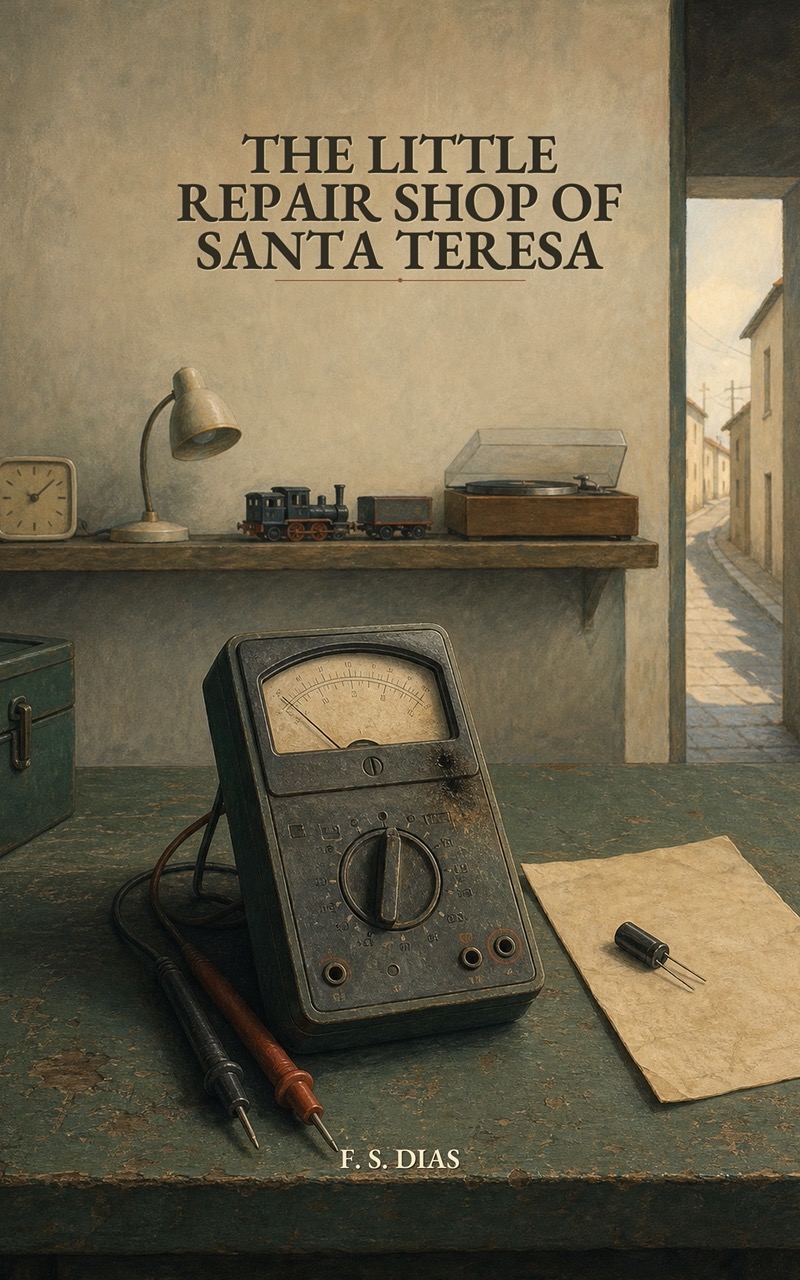
With The Little Repair Shop of Santa Teresa, I also write healing fiction: Brazilian healing fiction set in Rio de Janeiro and built from manual work, neighbourhood life, guilt, responsibility, and repair.
A repair shop where fixing does not erase the past
In Ademir Farias's small shop, clocks, drills, sewing machines, lamps, toys, and record players work again. Sometimes they also return a single instant of what they witnessed.
These fragments do not deliver the memory each character needed. They do not explain everything, automatically restore broken relationships, or turn the repairman into a therapist. They return only a partial truth — and the responsibility to decide what can still be done with it.
Writing healing fiction does not mean promising a cure. It means making room for a life to continue after what broke it.
An open authorial identity
F. S. Dias is not presented as the author of a single genre. He is a Brazilian writer working across different forms of fiction who also enters healing fiction with The Little Repair Shop of Santa Teresa.
What joins these forms is not a marketing label. It is an interest in memory, perception, responsibility, and the quiet structures that alter a life. Each book chooses the form it needs to reach those questions.
Healing fiction already has Brazilian readers. The Little Repair Shop of Santa Teresa joins that conversation with a workshop on a Rio hillside, objects worn by use, and a simple idea: repair does not restore what was lost; it changes what can still be done with the loss.
Back to the website